What Is the Outback in Australia? Here’s What Nobody Actually Tells You Before You Go
That was my introduction to the Australian Outback. And honestly? It ruined me for ordinary travel.
If you’ve been googling what is outback in Australia and getting back the same recycled geography lesson about arid climates and sparse populations — fair enough, that stuff’s true. But it doesn’t really tell you what the place feels like, or why people come back to it again and again. That’s what we’re going to get into here.
What Defines the Australian Outback Region?
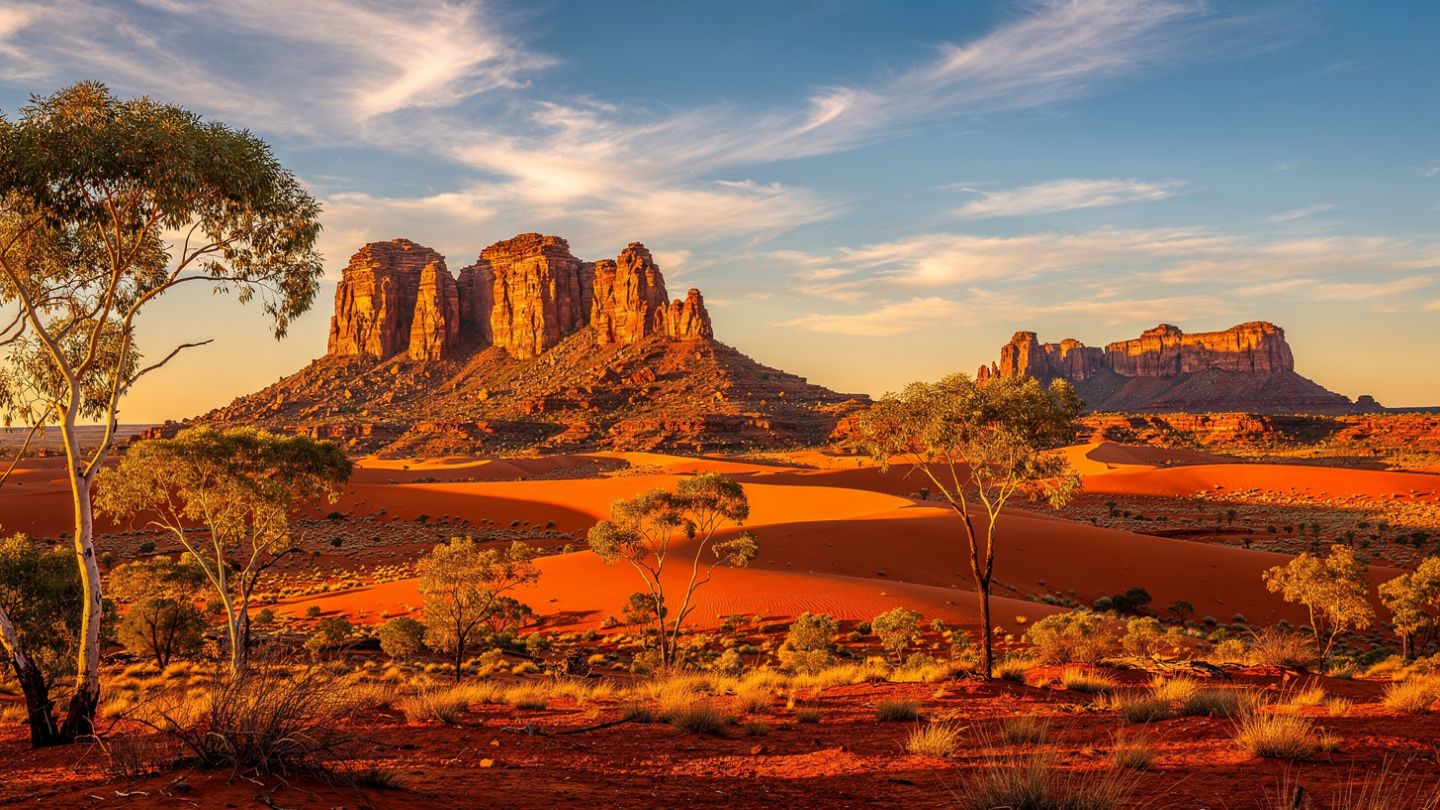
Most sources will tell you the Outback covers roughly 70% of Australia’s landmass — which is technically accurate and also kind of impossible to picture until you’re standing in the middle of it. It’s not one single place. It’s more like a mood that spreads across Queensland, South Australia, the Northern Territory, Western Australia, and parts of New South Wales.
There’s no official border that says “you’re in the Outback now.” The shift is gradual — towns get smaller, gaps between petrol stations get longer, the land flattens out or breaks into ridges of red quartzite, and eventually you realise you haven’t seen another car in forty minutes and that’s completely fine.
The climate swings hard. Summer days in Central Australia push past 45 degrees, and some nights in places like Coober Pedy drop cold enough to need a proper jacket. The Outback doesn’t do mild.
What matters most, though — and what a lot of travel content glosses over — is the cultural depth of this country. The Australian Outback has been home to Aboriginal and Torres Strait Islander peoples for at least 65,000 years. Some of the oldest continuous living cultures on the planet exist out here. The rocks, the waterholes, the walking tracks — they carry stories that go back further than most of us can properly comprehend. Any tour worth booking will make that part of the experience, not just scenery to drive past.
Best Ways to Experience the Australian Outback for Tourists?
Honestly, this depends on what kind of traveller you are — and how honest you’re willing to be with yourself about that.
Some people read about the Outback, buy a secondhand, load it with supplies and just… go. And occasionally that works out beautifully. More often, it results in a breakdown on an unsealed track with no phone signal and a creeping realisation that the car manual doesn’t cover “what to do when the red sand is this deep.”
The people who have the best Outback experiences tend to either know the country very well, or they go with someone who does.
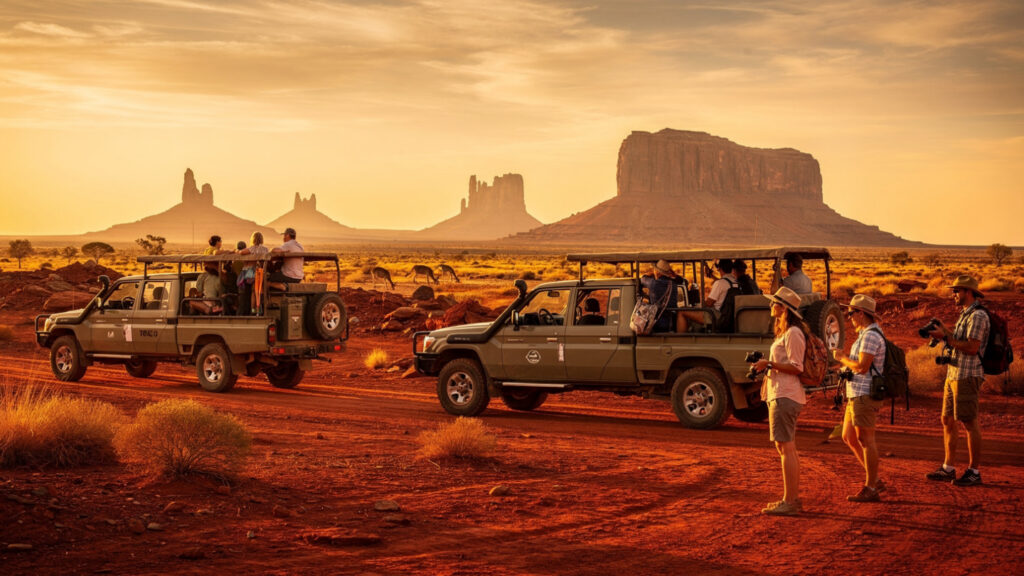
Guided small-group tours are genuinely the way to go if this is your first time — or even your third. The difference between driving past a gorge and having someone explain the Dreamtime story connected to it, point out the rock art you would have walked right past, and cook you a meal over a fire at the end of it… there’s no comparison.
Self-drive trips with a proper 4WD can be brilliant. The recommended vehicle types for Outback road trips are high-clearance 4WDs — a Toyota LandCruiser is the gold standard out here, but a well-prepared Nissan Patrol or a decent camper 4WD setup works too. Do not attempt serious Outback tracks in a standard sedan or a 2WD anything. It’s not worth it.
Which Travel Agencies Specialise in Outback Adventure Packages in Australia?
The Outback tourism market is busy and the quality gap between operators is huge. You’ve got big-coach operators who take 50 people to Uluru and back in three days — perfectly fine for some travellers — and then you’ve got smaller, specialist operators who get you into places that don’t even have a name on Google Maps.
At Gekko Safari, we sit firmly in the second camp. We run out of Brisbane and our focus is on South and Central Australia — landscapes that are genuinely spectacular and, outside of a few well-known spots, remarkably uncrowded.
What sets us apart from the bigger operators is simple: small groups, guides who’ve spent real time on this country, and itineraries that include the coastal South Australian experiences most Outback tours completely ignore — like whale watching South Australia trips along the Eyre Peninsula and limestone coast boat tours through the Lower South East.
We also have longstanding partnerships with Aboriginal rangers who co-guide on selected tours. That’s not a box-ticking exercise — it genuinely changes what you see and understand when you’re out there.
Other well-regarded names in the broader market include Intrepid Travel for budget group travel, APT for more comfort-focused larger tours, and World Expeditions if hiking is your main motivation.
Where Can I Find Guided Outback Camping Experiences in Australia?
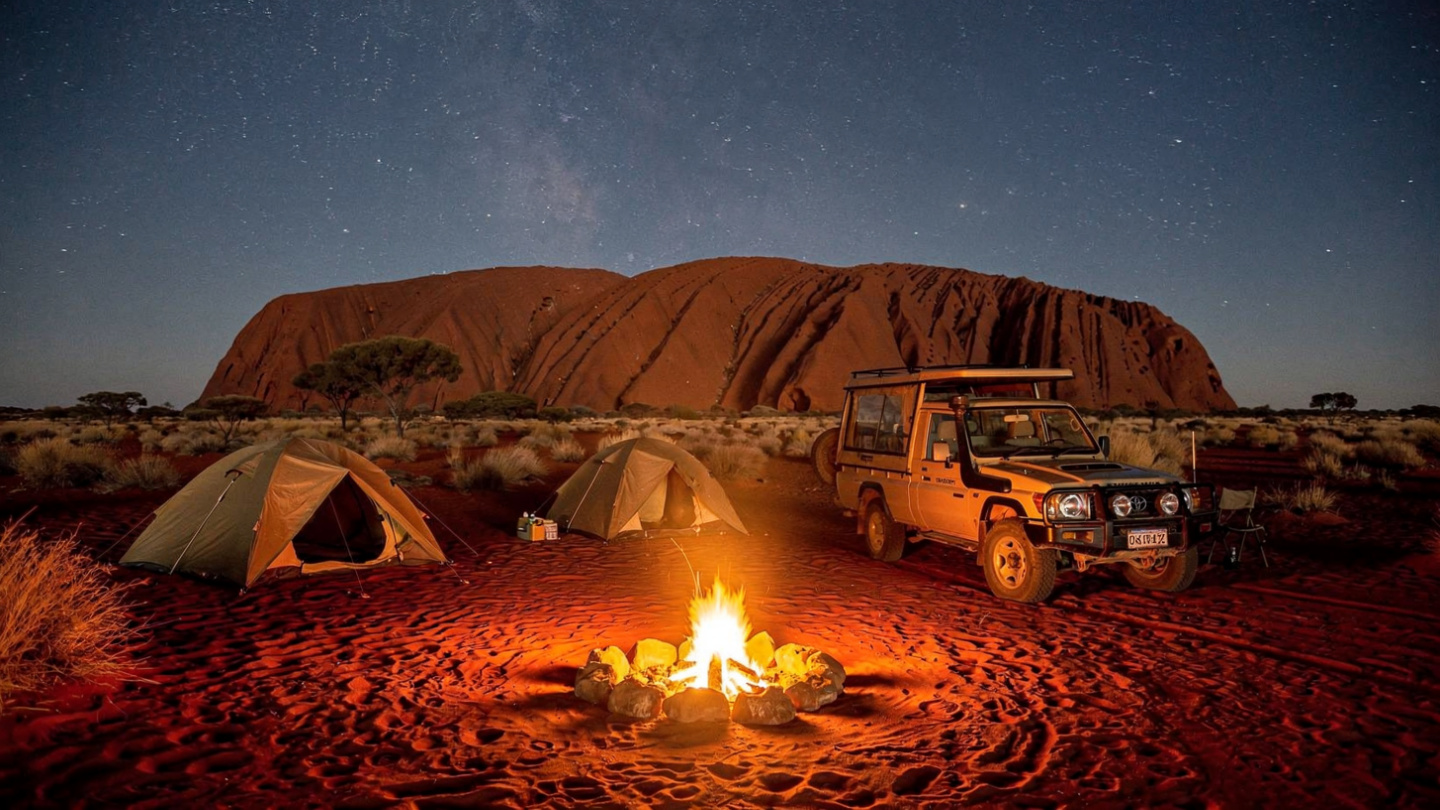
There’s a version of Outback camping that involves a camp bed, a fly net, a swag under the stars and breakfast cooked on a campfire. And then there’s the glamping version with proper mattresses, a chef, and a bottle of Barossa Shiraz waiting for you when you get back from the sunset walk.
Both are legitimate. Both are genuinely great. What matters is finding an operator who delivers whichever one you actually want — not what they think sounds better in a brochure.
The guided Outback camping experiences we run through Gekko Safari vary by itinerary. Our Flinders Ranges tours include nights at remote station properties — working cattle stations where the owners eat dinner with the guests and the conversation usually ends up being the best part of the trip. Our more rugged tours do proper swag camping in national parks, with fire pits and billy tea and all of it.
Key regions to look at for camping-based Outback tours: the Flinders Ranges in South Australia (accessible, dramatic, and full of wildlife), the Kimberley in Western Australia for serious adventurers, and Queensland’s Channel Country in the far southwest, which transforms completely after good rains.
One important note — not all Outback land is open for public camping. A lot of it crosses Aboriginal land or protected areas requiring permits. Go through a licensed operator and that side of things is handled for you.
Accommodation Options Available in Remote Outback Towns?
The clichéd image of a dusty pub with questionable plumbing still exists — and those pubs are sometimes wonderful in their own right, with a publican who knows everyone’s name and a beer garden that backs onto the desert. But Outback accommodation has genuinely expanded over the past fifteen years.
Station stays are one of the most rewarding options. Working cattle and sheep properties across South Australia, Queensland and the NT take in guests — and unlike a hotel, you’re actually in someone’s home, in the middle of their livelihood. Some include mustering experiences, horseback rides, or just the chance to sit on a veranda with a cold drink watching the light change over the paddocks.
Coober Pedy in South Australia does something completely different — underground accommodation carved into the hillside to escape the 45-degree summers. Dugout hotels, underground churches, underground homes. It’s genuinely one of the most unusual places to sleep in the world.
When you book through Gekko Safari, we choose accommodation that’s locally owned wherever possible. The money stays in the community, and you get a more authentic experience. Those two things aren’t always separate.
What Are the Top-Rated Outback Tour Operators in Australia?
Before we get into names, it’s worth talking about how to actually evaluate a tour operator — because star ratings online tell you surprisingly little.
It was built for search rankings but it maps perfectly onto how you should assess any Outback operator. Has this person actually spent time on the country they’re taking you to? Do they have formal qualifications in first aid, navigation, or cultural interpretation? Are they endorsed by recognised tourism or conservation bodies? And do they have a track record of operating responsibly?
Here’s a real example of why this matters. A traveller — let’s call her Mel, Brisbane teacher, mid-40s, booked her first Outback trip through a discount deal site. The operator was cheap, the guide was likeable but clearly inexperienced, and when she asked about the significance of a particular rock formation they were standing next to, the answer was basically a shrug. She told us this story when she booked her second Outback trip with Gekko Safari. Same landscape, different guide — someone who’d spent three years living in the Flinders Ranges, held a formal qualification in Indigenous cultural interpretation, and could spend twenty minutes talking about a single rock face in a way that made her understand Australia differently. Same country. Completely different experience.
When assessing top-rated Outback tour operators in Australia, look for: guide qualifications, years of operation, Indigenous community partnerships, emergency protocols, and memberships in Ecotourism Australia or the Australian Tourism Industry Council. Gekko Safari holds both.
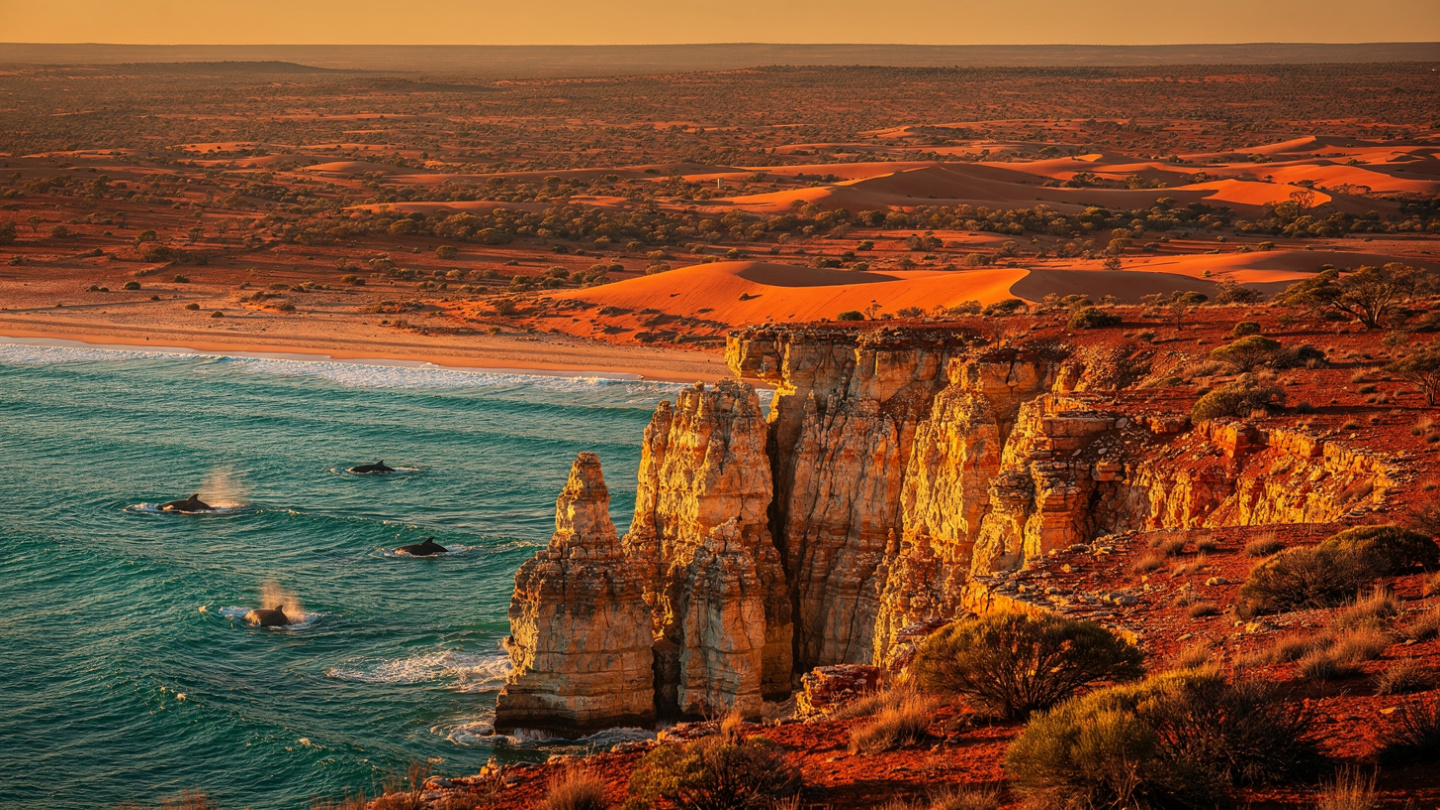
South Australia’s Coast Meets the Outback: Whales, Limestone and Extraordinary Scenery
Here’s something the big Outback guides almost never mention: some of the best experiences in South Australia happen where the red earth stops and the Southern Ocean begins.
The Eyre Peninsula in particular is extraordinary. You’ve got one of the most remote stretches of Australian coastline in the world — backed by the flat expanse of the Nullarbor — and from June through to October, whale watching Eyre Peninsula tours run to observe Southern Right Whales gathering in the sheltered bays near Head of Bight. These are massive animals, up to 18 metres long, breaching and nursing calves in the shallows while the Outback stretches out behind you. It’s an unusual combination of landscape and wildlife that you genuinely won’t find anywhere else.
The best time to see whales in South Australia is June to October, with peak activity usually in July and August. For whale sightings today South Australia, the Head of Bight Visitor Centre runs seasonal updates during the viewing season. The best time of day to see whales is early morning — calmer water, better light, and the animals tend to be more active before the wind picks up.
Further east, the Limestone Coast is a completely different scene — lush, green, and anchored by the city of Mount Gambier with its famous blue crater lake. Limestone coast attractions include the Umpherston Sinkhole (a sunken garden inside an ancient cave), the Coorong wetlands running north from the Murray mouth, and the string of historic fishing towns along the coast. Limestone coast boat tours through the Coorong are genuinely one of the most peaceful experiences in South Australia — pelicans, black swans, and water that reflects the sky in a way that makes the whole thing look slightly unreal.
Gekko Safari combines these coastal experiences with Outback itineraries routed through South Australia, meaning one trip can give you both the red desert and the Southern Ocean. Most operators never bother connecting these dots.
5 FAQs
What is the Outback in Australia — is it one region or lots of different areas?
It’s many different areas under one broad description. The Outback refers to Australia’s remote interior — covering roughly 70% of the continent — across multiple states and territories. It includes deserts, gorges, salt lakes, ancient mountain ranges, and semi-arid scrubland. There’s no single Outback — there are dozens of distinct landscapes that all fall under that name.
When is the best time to visit?
April through September is the comfortable window — cooler days, manageable temperatures, and for South Australia in particular, it overlaps with whale season on the coast. The Australian summer (November to February) is extreme in the interior and genuinely risky if you’re underprepared.
Do I need permits to access certain Outback areas?
Yes, in many cases. Aboriginal land, some national parks, and certain remote tracks require formal permits. When you book through a licensed operator like Gekko Safari, all permits are arranged on your behalf.
Is the Outback actually safe for tourists?
Yes — with preparation or with a qualified guide. The real risks are dehydration, vehicle breakdown on remote tracks, and disorientation. All of these are manageable with the right setup. Travelling with an experienced operator removes most of the risk entirely.
Can I combine Outback and whale watching in the same trip?
Yes, and it’s something Gekko Safari specifically builds itineraries around. A South Australia tour routed through the Flinders Ranges and down to the Eyre Peninsula gives you both — Outback landscapes and some of the best whales South Australia has to offer, particularly between June and October.
Come and Talk to Us — Gekko Safari, Brisbane
We’re not a call centre. When you reach out to Gekko Safari, you speak to someone who has actually been on the tours, knows the tracks, and can have a real conversation about what’s going to suit you and what isn’t.
If you’re thinking about Outback cultural heritage tours through the Flinders Ranges, a combined Outback and whale watching South Australia trip, limestone coast boat tours through the Coorong, or a longer itinerary into Central Australia — we’d love to hear from you. We build tours around what travellers actually want, not around what’s easiest to sell.
Get in touch through our website, give us a Phone or Email swing by — we’re always happy to talk about the Outback.