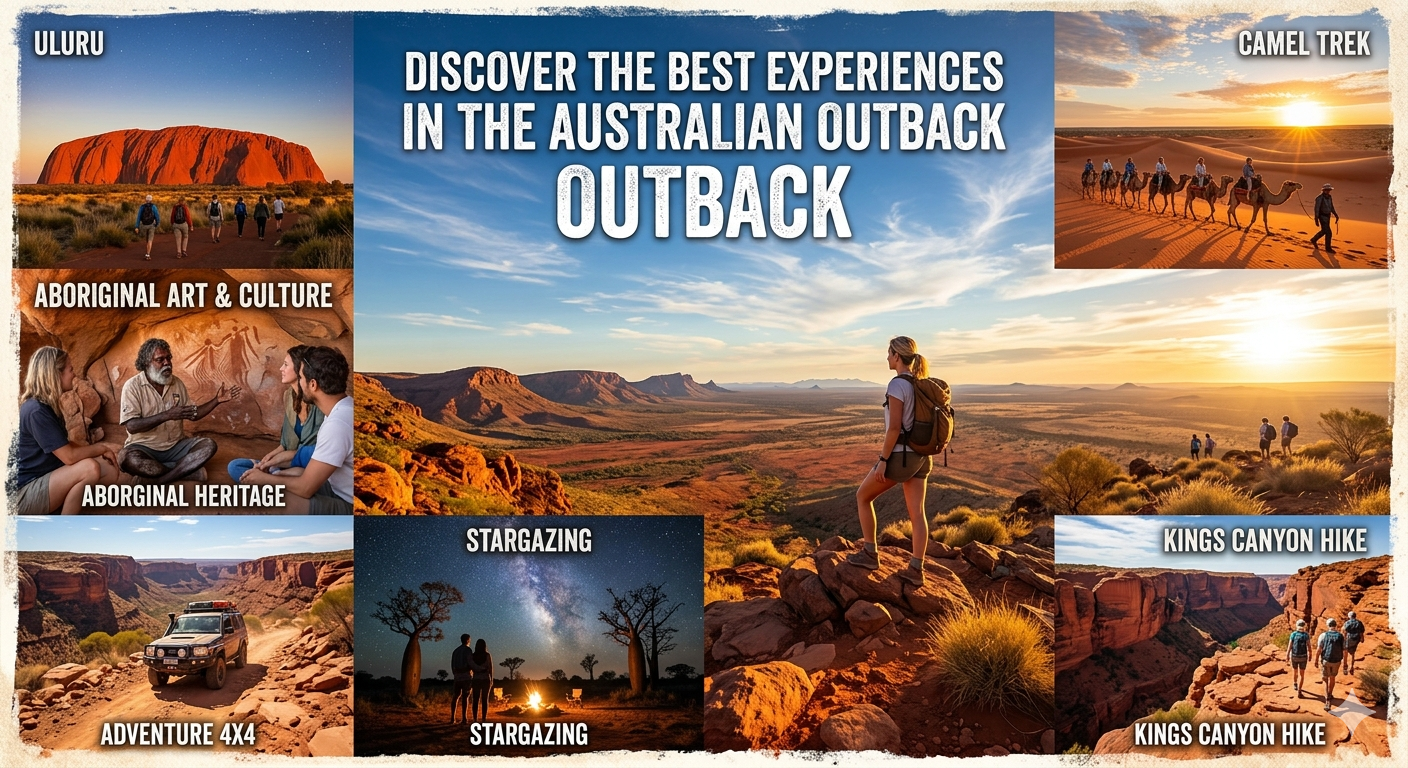
Discover the Best Experiences in the Australian Outback
I’ll be honest with you — the first time I drove out past Port Augusta with nothing but red dirt in every direction, I pulled over and just sat there for a bit. Not because something was wrong. Because nothing was. No notifications. No traffic. No noise except the wind moving through spinifex. It hit me in a way that’s hard to explain unless you’ve been there yourself.
That feeling is exactly why Gekko Safari exists. We started taking people out into South Australia’s outback because we genuinely love this country — the actual country, not just the highlight reel version — and we got tired of watching tour operators rush people through it like it was a checklist to complete.
If you’re after the best Australian outback tours that actually give you time to breathe, look around, and understand where you are — you’ve found the right team.
Why Gekko Safari Runs the Best Australian Outback Tours in South Australia
Look, there are plenty of operators running trips out here. Some of them are fine. But most of them are doing the same loop, stopping at the same signs, telling the same three facts about the same geological formation.
We do things differently and it’s not because we planned some big marketing strategy. It’s because our guides grew up in this region. They know which waterhole the emus visit at dusk. They know which families have been on Adnyamathanha country for sixty thousand years and are willing to share a bit of that story with visitors who come respectfully. That kind of knowledge doesn’t come from a training manual.
For us that’s not just a framework, it’s just how we operate. Here’s a quick example of what that actually looks like on the ground: one of our regular guests, a bloke named Terry from Melbourne, had done a big coach tour of the outback a few years back. When he joined one of our small groups out near Marree, he told us midway through day two — “I saw all of this before but I had no idea what I was looking at.” That’s the gap we fill.
What Is the Best Way to See the Outback in Australia?
The outback genuinely punishes people who rush it. You end up with sunburn, a camera full of photos that all look the same, and a vague feeling that you missed something. Because you did.
The best way to see it — and we say this from years of watching people arrive skeptical and leave converted — is slowly, in a small group, with a guide who can answer the question “why does that tree only grow on that side of the creek?” Because there’s always a reason, and the reason is always interesting.
Our trips at Gekko Safari cap at ten people. That’s intentional. Ten people means we can take the unmarked track when conditions are right. It means we stop for the things that aren’t on any itinerary. Our outback cultural heritage tours take guests onto country where Traditional Custodians share knowledge on their own terms — and that only works when the group is small enough to actually have a conversation, not a lecture.
Self-driving the outback is possible, but you’ll miss about 80% of what makes it special. The rock art panels that have no sign pointing at them. The station families who’ll share a meal with a small tour group but not with a convoy of grey nomads. The stories that explain why this land looks the way it does.
Which Tour Company Is Best in Australia?
For the Northern Territory, there are some excellent operators. For Queensland, same. But for South Australia’s outback, the Flinders Ranges, the Eyre Peninsula, the Limestone Coast — this is our backyard. We’re not a national franchise that happens to have a South Australia tab on the website. We’re a South Australian company, run by South Australians, who have been doing this in this specific region for years.
That specificity matters. When the whales in South Australia start moving through the bays off the Nullarbor in June, we know which spots give you the best view from shore and which Limestone Coast boat tours to book for the on-water experience. We don’t have to Google it. We were out there last season.
What Is the Most Outback Town in Australia?
Most people say Coober Pedy and they’re not wrong. An underground opal-mining town where people literally live below the surface to escape the heat — yeah, that qualifies. We take guests there and it never gets old watching someone walk into their first dugout home.
But honestly, if you’re asking which town feels most genuinely, uncompromisingly outback — my vote goes to William Creek. There are maybe a dozen permanent residents. The pub is the town. The flying doctors land on the road out front. The cattle station behind it is larger than some European countries. There’s no performance happening there, no tourism polish. It’s just a place that exists because the country around it demanded it exist, and it does, stubbornly, against all reasonable odds.
Marree’s another one worth knowing. Sitting right at the junction of the Birdsville Track and the Oodnadatta Track, it’s a quiet town with a lot of history underneath the surface — if you know where to look. Our outback cultural heritage tours spend time here not because it’s on the tourist map but because the stories here are worth hearing.
What Is the Best Time to Visit the Outback?
April to October. That’s the window. Outside of it you’re fighting the heat in summer and the roads can close entirely after any decent rain in late autumn.
January and February are out near Oodnadatta or Innamincka — we’ve seen 52 degrees. At that temperature, the landscape doesn’t become beautiful, it becomes hostile. Your vehicle’s air conditioning is doing everything it can and you still don’t want to step outside between 10am and 4pm.
Winter — June through August — is when we love it most. Days around 18 to 22 degrees, cold enough at night that you actually want to sit around a fire. The light in the late afternoon turns everything copper and gold. Wildlife is more active because they’re not hiding from the heat. And if you’re planning to combine your outback trip with whale watching in South Australia, June through October is when the southern right whales move through — along the Limestone Coast and up into the sheltered bays of the Eyre Peninsula. It lines up perfectly.
Book six weeks ahead minimum for the May-to-September period. We’re not saying that to pressure you — we’re saying it because we have had to turn people away in August and nobody feels good about that.
Limestone Coast Attractions, Whale Watching and What the Eyre Peninsula Is Actually Like
People often treat the Limestone Coast as a wine region and leave it at that. Which — yes, the wine is excellent, Coonawarra alone is worth a trip — but the coast itself is genuinely strange and beautiful in ways that have nothing to do with shiraz.
The sinkholes at Naracoorte. The fossils. The town of Robe, which has this quality of existing slightly outside of time. The way the limestone coast attractions change character every twenty kilometres from scrubland to cliff face to estuary. We’ve run Limestone Coast boat tours where guests have seen Australian sea lions hauled out on rock shelves fifty metres from the boat, completely unbothered by us.
The Eyre Peninsula is a different kind of place. It’s rugged in a way the Limestone Coast isn’t. The coastline on the western side of the peninsula, looking out toward the Great Australian Bight, is some of the most exposed and spectacular in the country. And then from June onwards, the whale watching on the Eyre Peninsula starts. Southern right whales come into the bays. Mothers with calves. They’re not shy — there are spots where you can watch them from the cliff tops without a boat and still feel uncomfortably close in the best possible way.
Whales in South Australia don’t get nearly enough attention compared to, say, Hervey Bay in Queensland. The crowds are smaller. The experience is more personal. We think it’s genuinely one of the best wildlife encounters in the country and we’ve built itineraries around it specifically.
What Is the Most Beautiful Road Trip in Australia?
The Nullarbor gets the fame. Driving the Eyre Highway, you go through the longest straight stretch of road in Australia — 146 kilometres without a bend. That does something to your brain. In a good way.
But the road trip that actually moves people — the one guests still talk about two years later — is the Flinders Ranges loop out of Port Augusta. Up through Quorn and Hawker, into Wilpena Pound, out past Parachilna, across to Blinman. The colours change every half hour. The geology is stacked up in layers you can actually read once someone explains what you’re looking at. At Wilpena Pound you’re standing inside an ancient natural amphitheatre formed over 800 million years of geological pressure. It looks like nothing else on earth.
Extend that north through the Strzelecki to Innamincka and you’ve got one of the great Australian road journeys. Five to six days if you want to do it properly. Every Gekko Safari road trip comes with satellite communication, vetted fuel stops (this is important — running out of fuel out here is not a minor inconvenience), and guides who’ve done these roads enough times to know when conditions have changed.
5 FAQs About Outback Tours in South Australia
- Do I need to be fit to join a Gekko Safari tour?
Not especially. Our standard tours involve some walking but nothing strenuous. If you have mobility concerns, tell us at booking and we’ll work around them. We’ve had guests in their eighties who did just fine — the pace is relaxed, not a race.
- Are kids welcome on the cultural heritage tours?
Yes, and actually kids often get the most out of them. There’s something about a child asking a direct question to a Traditional Custodian that creates a really genuine moment of connection. We recommend eight years and up for multi-day trips, but day tours can work for younger children too — just ask us first.
- What do I actually need to pack?
More layers than you think. It sounds counterintuitive for the desert but the nights get genuinely cold from April onwards. Wide-brim hat, real sunscreen (not the stuff from the servo), comfortable closed shoes, a decent reusable water bottle. We’ll send you a full list when you book. Don’t ignore it.
- Can I do an outback trip and see whales on the same holiday?
Yes — several of our itineraries are built exactly for this. Inland one part of the trip, coastal the other. The Eyre Peninsula combination is especially good between July and September when both the whale watching season and the outback conditions are at their best simultaneously.
- What’s the booking process like?
Simple. Call us or fill out the form on the website. Someone from the actual team — not a call centre — will get back to you, usually within a day. We’ll talk through what you’re after, match you to the right trip, and take a deposit to hold the spot. No hidden costs, no surprises at the end.
Get in Touch With Gekko Safari
If you’ve read this far, you probably already know this is the kind of trip you want to take. So don’t sit on it. The winter and spring spots go early every year and we’d rather you were on a tour than reading about one.
Call us, send an email, or fill out the enquiry form. We reply personally. Tell us what you’re hoping to find out here — the outback cultural heritage, the Limestone Coast, the whale watching on the Eyre Peninsula, just the silence and the sky — and we’ll put together something worth making the trip for.