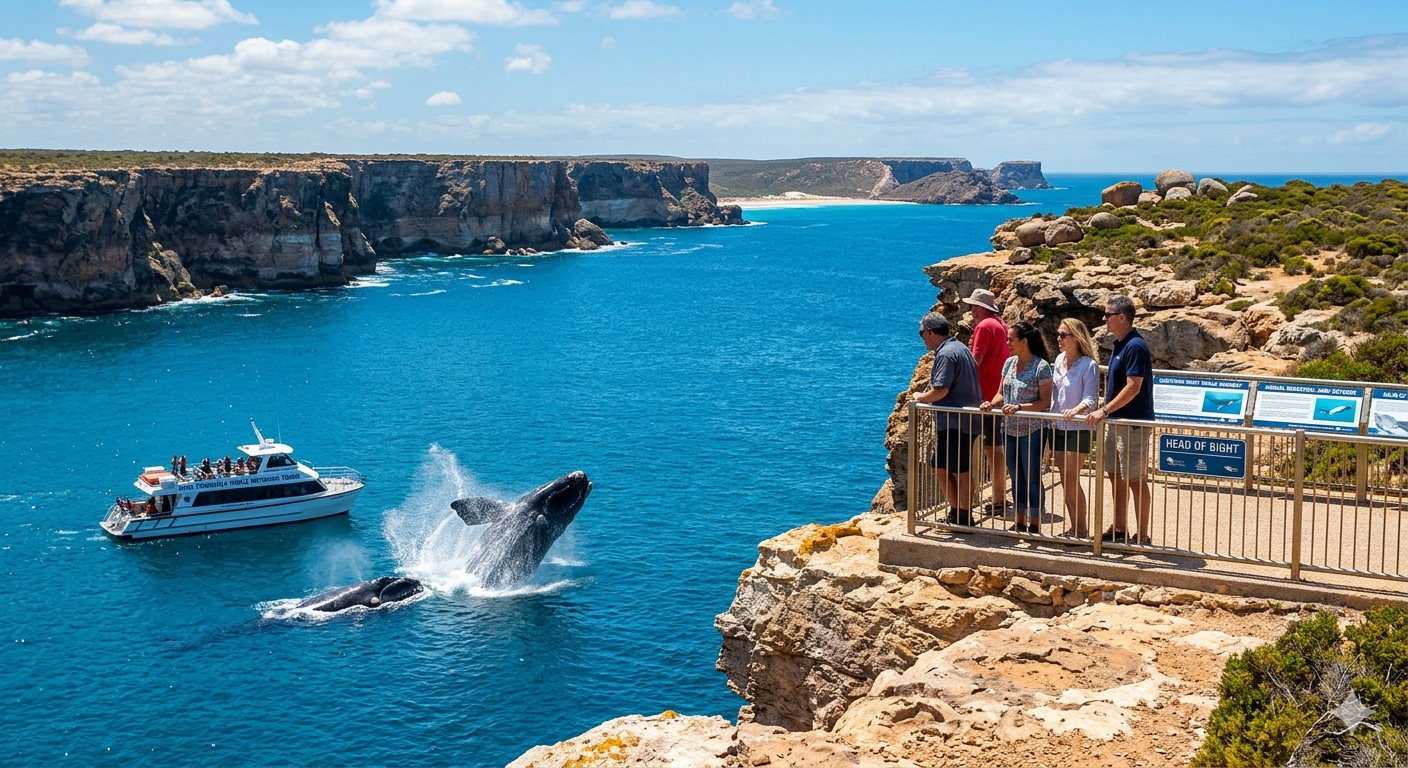
Top Reasons to Visit Eyre Peninsula for Incredible Whale Watching Tours
Pull up to the whale watching eyre peninsula on a grey June morning and you’ll understand it pretty quickly. This isn’t a manicured tourist strip. It’s wide, it’s salty, and it smells like the Southern Ocean. Fishing boats leave before sunrise. Pelicans work the jetties. And somewhere out past the swells, a Southern Right Whale is making her way up the coast with a calf that’s only a few weeks old.
That’s the Eyre Peninsula. And if you’ve been searching for whale watching in South Australia that actually delivers — not just a distant splash and a shrug — this is where you need to be.
Gekko Safari has been running tours out here long enough to know the difference between a good day and a great one. Here’s what makes this part of the world so special, and why so many guests come back season after season.
Why Whales in South Australia Gather Along the Eyre Peninsula
South Australia has a long coastline. Whales pass through a good chunk of it. But the Eyre Peninsula sits right in the middle of something special — a natural corridor where Southern Right Whales and Humpbacks move through predictable stretches of water, close enough to shore that you’re not spending your whole trip squinting at the horizon.
The bays here are sheltered. The water clarity is remarkable. And because this region hasn’t been turned into a resort destination, the wildlife encounters feel genuinely wild. You’re not watching whales from a hotel balcony. You’re out there with them, on the water, with a guide who knows their habits better than most people know their neighbours.
Southern Rights tend to favour the calmer inlets — they’re nursing mothers mostly, slow-moving and curious. Humpbacks are a different story. They breach. They slap. They make a scene. Seeing both species in a single outing isn’t unusual on a Gekko Safari tour during peak season.
Eyre Peninsula Whale Watching Tour Season — What You Need to Know
The season runs May through October. June, July, and August are the heart of it — that’s when you’ve got the highest concentration of whales in South Australian waters and the best odds of a close encounter.
May is worth considering if you’re flexible. Fewer tourists, the first Southern Rights are already arriving, and the peninsula has a quietness to it that full winter erases pretty quickly. October is the tail end — Humpbacks pushing back south, some years better than others.
What Gekko Safari does differently is they don’t just run tours on a fixed calendar. They track what’s actually happening out there. If whales have shifted to a different bay, the departure adapts. Guests get updates before they even leave accommodation. There’s no worse feeling than getting out on the water and learning the whales moved yesterday — Gekko Safari’s team works hard to make sure that doesn’t happen to you.
Best Time of Day to See Whales — Straight Answer, No Fluff
This comes up constantly. And honestly the best time of day to see whales depends on a few things — sea conditions, wind, what the whales are doing that particular morning.
That said, early is almost always better. Gekko Safari’s morning departures head out when the surface is calm and the light is flat and clear. Spouts show up from a distance. Whale behaviour tends to be more active — feeding, socialising, calves playing close to their mothers. By early afternoon the swell often picks up and spotting gets harder.
There’s no guarantee with wild animals. But if you want to put the odds in your favour, go in the morning. The guides will tell you the same thing.
What Actually Means When You’re Booking a Wildlife Tour
But it’s also a pretty useful checklist when you’re deciding who to trust with a once-in-a-lifetime wildlife experience.
Here’s a real example of what it looks like on the water. A Gekko Safari guide was running a standard morning route near Coffin Bay a couple of seasons back. The whales weren’t where they were supposed to be. Another operator might’ve continued the route and called it a slow day. Instead, the guide remembered a shallow reef shelf further north where he’d seen unusual aggregation behaviour once before. Changed course. Forty minutes later, a sub-adult Humpback was logging beside the vessel — just resting there at the surface — close enough that guests could hear it breathe.
That call came from years on the water. Not a checklist. Not a GPS point. That’s what experience looks like when it matters.
Gekko Safari guides hold current marine wildlife watching accreditations. Tours operate within South Australian regulations — minimum approach distances, no harassment protocols, everything documented. When you’re booking a whale watching tour, that stuff isn’t a nice-to-have. It protects the animals and it protects your experience.
Whale Sightings Today South Australia — How Gekko Safari Stays Ahead
During peak season people search “whale sightings today South Australia” hundreds of times a day. It’s a reasonable thing to want to know. Are they out there right now? Where are they moving?
Gekko Safari maintains real-time sighting logs throughout the season. The team is in contact with other operators, local fishermen, and coastal observers who report what they’re seeing. Before your tour departs, you’ll know roughly what to expect and where the activity has been concentrated.
It’s not a guarantee — it never is with wildlife. But it’s the difference between heading out blind and heading out informed.
5 Questions People Actually Ask About Whale Watching on the Eyre Peninsula
Q: When is the best time to visit the Eyre Peninsula for whale watching?
June through August is the sweet spot. Southern Right Whales arrive from late May. Humpbacks follow through July and August. If you can only pick one month, July is consistently strong — activity is high and the weather is stable enough for comfortable on-water conditions.
Q: What whales will I actually see?
Southern Right Whales and Humpbacks are the two main species. Southern Rights are the more frequently sighted during the early season — calm, slow, often with calves. Humpbacks are more dramatic and tend to put on a show. Occasionally guests encounter Orca in deeper offshore stretches. Blue Whales have been spotted in the Bight, though they’re rarer on tours.
Q: Is this suitable for kids?
Yes, with some preparation. Gekko Safari guides run a pre-departure briefing that covers everything — what to watch for, how to move on the vessel, what to do if you feel unwell. For younger kids, take sea sickness seriously and dose accordingly before departure. The reward is absolutely worth it.
Q: How long does a tour run?
Standard tours are three to five hours depending on conditions and activity. Full-day options are available and include additional wildlife stops along the coast — seabirds, sea lions, sometimes dolphins on the way back in.
Q: What if we don’t see any whales?
Gekko Safari has a strong seasonal sighting rate, but no ethical operator guarantees wild animal encounters. On the rare occasion a tour comes up empty, the team offers guests priority rebooking. It almost never comes to that — but it’s there.
Come and See What the Eyre Peninsula Has Been Hiding
The Eyre Peninsula doesn’t advertise itself very loudly. That’s part of what makes it worth the trip. The towns are real, the coastline is raw, Email or Phone and the wildlife encounters — when they happen — are the kind that stick with you in a way that polished tourist attractions never quite manage.
Gekko Safari has built something genuine out here. Come and see it for yourself.